
Hydro Excavation & Hydrovac
Non-destructive digging: daylighting, potholing, slot trenching. 24/7 emergency hydro excavation and hydrovac response across Georgia and the Southeast.
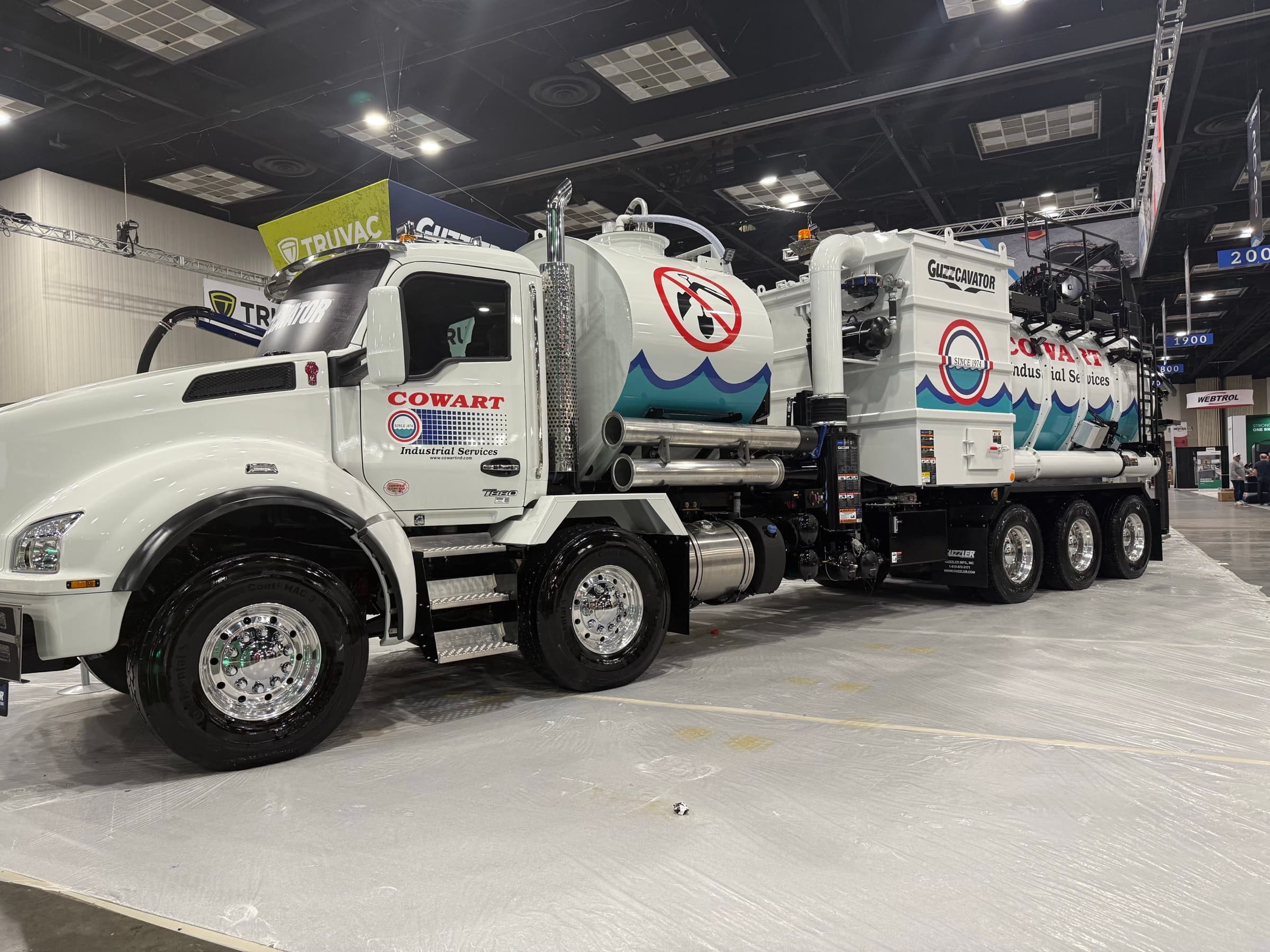
Cowart Industrial's hydro excavation service uses high-pressure water and simultaneous vacuum recovery to excavate soil without ever putting a digging tool against buried infrastructure. The water jet cuts and slurries the soil; the vacuum hose lifts the slurry into an onboard debris tank in real time. The result is a clean, precisely shaped hole with zero mechanical contact between the dig and any pipe, cable, or conduit in the ground. It is, by every objective measure, the safest excavation method commercially available, and on jobs where a utility strike means a million-dollar event, that's the only measure that matters.
Common hydrovac applications include utility locating and daylighting (exposing existing utilities before adjacent work), potholing for engineering survey, slot trenching for fiber and gas, post-hole excavation, debris removal from utility vaults and manholes, frozen-ground excavation, and emergency exposure during utility strikes. We work with general contractors, utility companies, engineering firms, telecoms, gas distribution operators, and municipalities across an eight-state Southeastern footprint. Most of our hydro excavating work is scheduled against a construction calendar, but emergency response is a real part of the operation and is dispatched 24/7 from Carrollton.
Hydro excavation pairs naturally with the rest of Cowart's vacuum truck fleet and treatment operation. The same trucks that excavate can also vacuum sludge, transport liquid waste, and dispose of the spoil at our own non-hazardous treatment plant or a permitted disposal facility. End-to-end under one DOT number, one dispatch, one phone call, without subcontracting the spoil disposal step to a hauler you didn't pick.
How hydro excavation actually works
A hydrovac rig combines two pieces of equipment on a single chassis: a high-pressure water system and a high-flow vacuum recovery system. Water is heated and pressurized through a wand to roughly 2,000-3,000 PSI, high enough to break and slurry typical soils, low enough that a glancing hit on a buried pipe or cable does not damage it. As the wand cuts, an 8-inch vacuum hose alongside the operator pulls the resulting slurry into the truck's debris tank in real time. The hole develops as fast as the operator can sweep, and the spoil never piles up around the dig.
The safety case rests on one fact: no mechanical contact. Backhoes and trenchers cut through whatever they meet. Hydro excavation cuts soil and is functionally inert against the targets that matter, fiber-optic conduit, gas mains, fiber bundles, copper telecom, water mains, electrical primaries. That changes the math on damage prevention. A backhoe operator who clips a 4-inch gas main creates an incident; a hydrovac wand that brushes the same main exposes it for inspection.
It's also fast for what it is. Compared with hand-digging, which has historically been the only "safe" method around live utilities, hydrovac runs 3-10× the production rate. Compared with mechanical excavation, it's slower but eliminates the strike risk and the rework that follows a hit. For the right job (small dimension, buried utilities present, no tolerance for damage), it's simply the right tool.
When to call for hydro excavation vs. mechanical digging
Hydrovac is the right method when: existing utilities are in or adjacent to the dig footprint, the dig dimension is small enough that production rate doesn't dominate cost, the spoil has to be removed cleanly (no piles on adjacent surfaces), the substrate is frozen or otherwise tough on mechanical equipment, or a strike would cause damage out of proportion to the job's cost. Common scenarios: locating and daylighting before adjacent backhoe work, potholing for engineering survey, exposing existing utilities for tie-in, slot trenching in a roadway, vault and manhole cleanout, and any dig where the locate paint is dense.
Mechanical excavation is the right method when: the dig is large-volume, no utilities are present (or have been positively cleared by daylighting), production rate is the dominant cost, and the substrate is suited to a bucket. The two methods are complementary, not competing, most projects of any scale use hydro to expose what's there and a backhoe to move what's not.
Cowart's role on most projects is the hydro phase. We work with the general contractor or the utility's contractor and own the daylighting, potholing, and emergency-exposure scope while a separate crew handles the bulk dig.
24/7 emergency hydro excavation services
Emergency hydro excavation is a real dispatch category at Cowart, not an answering service. When a backhoe clips a gas main at 2 a.m., when a water main break has to be exposed before the utility can isolate it, or when a fiber cut needs daylighting before splicing crews can work, dispatch in Carrollton answers around the clock and a hydrovac rig rolls the same day across the Atlanta metro, west Georgia, and east Alabama. Farther out in the eight-state footprint, emergency response is coordinated with the responding utility so the rig arrives when the site is ready for exposure work.
Emergency exposure work runs differently from scheduled daylighting. The crew coordinates with the utility's incident commander, follows the owner's isolation and lockout procedures before the wand is energized, and cuts only soil, so the damaged line, and every intact line beside it, can be assessed without adding mechanical risk to an already-damaged corridor. The same truck vacuums standing water and spoil out of the excavation as it develops, which matters when a main is still weeping into the hole.
If you are standing on a strike site right now: call 770.834.2158, give dispatch the cross streets, the utility involved, and whether the owner has been notified. Everything else can be sorted while the truck is en route.
Daylighting services for contractors, utilities, and facilities
Daylighting, exposing the top of a buried utility so it can be visually verified, is the bread and butter of hydro excavation, and different customers buy it for different reasons. General contractors daylight before adjacent mechanical excavation so the backhoe operator is digging next to a verified location instead of a paint mark. Utility owners and their contractors daylight for tie-ins, crossings, and condition assessment. Engineering and survey firms order potholing programs, exposures every 25 to 100 feet along a route, to turn assumed utility depths into surveyed ones before design is finalized.
Facility owners are the quieter market: manufacturing plants, warehouses, and campuses daylight before dock expansions, foundation work, fence lines, and stormwater repairs, anywhere as-built drawings are old enough to be fiction. Municipalities and parks departments use the same service for irrigation mains, lighting circuits, and force mains under public ground. The job is identical in every case: verify what is actually down there, without putting a tooth on it, and hand over a clean, surveyed exposure.
Spoil disposal, the part most contractors hand off
The slurry that goes into the debris tank has to come back out somewhere. For most hydrovac contractors, that somewhere is a third-party disposal site, which means a transport vendor, a tipping fee, and a separate paper trail per load. The cost shows up on the customer's invoice as a pass-through and tends to be vague.
Cowart hauls hydrovac spoil to its own treatment plant in Carrollton, Georgia under its own DOT number. For non-hazardous spoil (the vast majority of hydrovac jobs), the disposal step is integrated, characterized, and priced predictably. Your project doesn't get held up while the truck waits for a slot at a third-party transfer station; it doesn't get a surprise charge for a tipping fee adjustment; and the disposition documentation comes out of the same system that generated the vacuum job.
Industries we serve
Where we work
- Atlanta
- Augusta
- Columbus
- Macon
- Savannah
- Carrollton
- LaGrange
- Newnan
- Rome
- Birmingham
- Mobile
- Montgomery
- Huntsville
- Tuscaloosa
- Anniston
- Knoxville
- Chattanooga
- Nashville
- Memphis
- Columbia
- Charleston
- Greenville
- Spartanburg
- Charlotte
- Raleigh
- Greensboro
- Wilmington
- Jacksonville
- Tampa
- Pensacola
- Panama City
- Jackson
- Meridian
- Pascagoula
- Gulfport
- Louisville
- Lexington
- Owensboro
- Paducah
Common questions
Quick answers on scope, method, safety, and turnaround. Don’t see your question? Ask us directly.
Q-01What is hydro excavation?
Hydro excavation (also called hydrovac excavation or non-destructive digging) uses high-pressure water and simultaneous vacuum recovery to excavate soil without mechanical contact with the ground. A water jet at roughly 2,000-3,000 PSI cuts and slurries the soil, and an 8-inch vacuum hose lifts the slurry into an onboard debris tank in real time. The result is a clean, precisely shaped hole with zero risk of striking buried utilities.
Q-02How is hydro excavation different from regular digging?
Mechanical excavation (backhoes, trenchers, augers) cuts through whatever it meets, soil and any utility lines in the path. Hydro excavation only cuts soil; it does not damage gas mains, water lines, fiber conduit, telecom, or electrical primaries even on direct contact. The trade-off is production rate: hydrovac is slower than a backhoe per cubic yard, but eliminates the strike risk that drives most utility-damage incidents.
Q-03When should hydro excavation be used?
Whenever existing utilities are in or near the dig area, when potholing or daylighting is required, for slot trenching in roadways, for emergency exposure during utility strikes, in frozen or otherwise tough ground, and any time spoil has to be removed cleanly without piles around the dig. Most jobs that combine "buried utilities present" with "small dig dimension" are better done with hydrovac.
Q-04Can you do utility daylighting and potholing?
Yes, that's the most common application of our hydro excavation service. Daylighting exposes the top of existing buried utilities so they can be visually verified before adjacent work begins. Potholing exposes specific points (typically every 25-100 ft along a route) for engineering survey. Both are done quickly, cleanly, and without risk to the utility being exposed.
Q-05Do you handle utility-strike emergencies?
Yes. 24-hour emergency dispatch from Carrollton, GA. If a backhoe has clipped a line and the utility needs to be exposed quickly to assess damage, our hydrovac rig can be on site fast across Georgia, Alabama, and the eastern half of our service area. Crews are trained to work alongside the responding utility company and follow their isolation procedures before the wand is energized.
Q-06What does hydro excavation cost?
Hydrovac work is typically priced by the day or by the hour, plus disposal of the recovered spoil. The day-rate is higher than a backhoe day-rate, but the apples-to-apples comparison has to include the cost of a utility strike, which, for fiber, gas, or telecom, can run into six or seven figures with regulatory penalties. For jobs with buried utilities in play, hydrovac is usually the cheaper method on expected-value terms even when the per-hour rate is higher.
Q-07What happens to the spoil after the dig?
The spoil, soil and water slurry, is transported under our own DOT number to Cowart's treatment plant in Carrollton, Georgia, or to a permitted disposal facility appropriate to the material. We handle disposal in-house for non-hazardous spoil rather than handing the load off to a third-party hauler, which keeps the paper trail and the cost predictable.
Q-08What states do you serve for hydro excavation?
Cowart's hydro excavation service operates across the Southeast, Georgia, Alabama, Tennessee, South Carolina, North Carolina, Florida, Mississippi, and Kentucky. Dispatch is based in Carrollton, GA, with 24-hour emergency response for utility strikes and same-week scheduling for routine daylighting and potholing work.