
Vacuum and Sludge Box Rental
Rent sealed 20-yard vacuum boxes for sludge, dewatering, and plant cleanouts. Delivered, swapped, hauled, and disposed at our own plant. 24-hour dispatch.
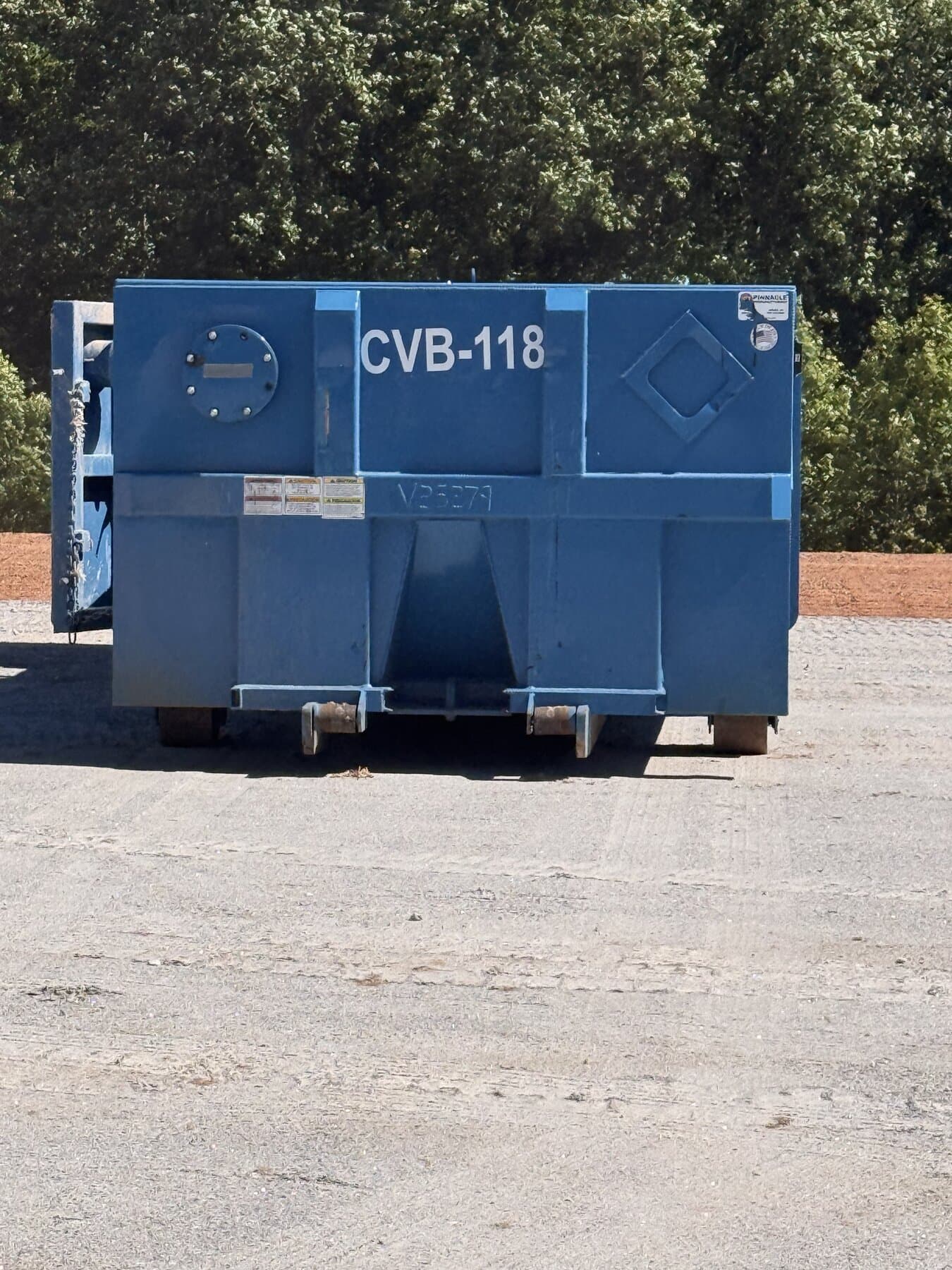
Cowart Industrial provides vacuum box and sludge box service for industrial sites that need sealed containment for liquid or sludge, material a standard open-top roll-off can't hold. Our vacuum boxes are 20-yard sealed steel containers, rated for vacuum loading and built to keep liquids in place during transport. They're the bridge between a tanker (free-flowing liquid only) and a roll-off (dry solid only): the right tool for sludge, slurries, dewatered cake, tank bottoms, semi-solid waste streams, and any project where the material won't pump as a liquid but won't sit dry either.
The service is end-to-end. Boxes deliver and stage on-site at the location you specify, accept vacuum-truck loading from our tankers (or yours), and pull when full. One dispatcher coordinates the loading truck, the box, and the haul-off, not three. Once full, the box transports under Cowart's own DOT number to our non-hazardous wastewater treatment plant in Carrollton, Georgia or to a permitted disposal facility appropriate to the material profile. Boxes are washed and inspected between rentals.
Common applications include sludge pit cleanouts, dewatering operations, food-process waste, oily-water bottoms, tank cleanings, refractory removal staging, and any job where the waste stream is too wet for a roll-off but too solid or too volume-heavy for a tanker. Boxes are available for scheduled service or emergency response across our 8-state Southeastern footprint.
What a vacuum box is, and what it isn't
A vacuum box (sometimes called a sludge box, vac box, or roll-off vacuum container) is a sealed steel container engineered to be loaded under vacuum and transported under DOT regulation as a liquid-bearing container. The seal matters: standard open-top roll-offs vent material during transport and aren't rated for liquids or sludge that hasn't been solidified. A vacuum box keeps the load in place from the loading point to the disposal facility.
It's the right tool when the material is too wet for a roll-off but you don't want to truck it as a liquid load. Sludge that pumps but doesn't flow, dewatered filter cake, tank bottoms, oily-water emulsions that have separated, slurries thick enough to challenge a tanker, all of those move efficiently in a vacuum box. Material gets loaded by vacuum truck (the truck pulls the load from the source, discharges to the box, repeats), and the box ships out when full.
How the service runs
Standard delivery is a 20-yard sealed steel box dropped at your loading point on flat, prepared ground. Box dimensions and weight are sized to standard roll-off transport. Once on-site, the box can stage for the duration of the project, a multi-day pit cleanout, a turnaround that produces sludge over a week, a tank cleaning that fills a box per shift. Loading is done by Cowart vacuum trucks (or yours, if your facility runs its own vacuum fleet) drawing material into the box through standard fittings.
When the box is full or the project ends, we pull it on a roll-off chassis and haul under our DOT number to our treatment plant in Carrollton, Georgia, or to a permitted disposal facility matched to the material profile. Disposition documentation is generated by our system and tied to the original manifest, your environmental coordinator sees the full chain from generation to final disposal under one vendor.
Industries we serve
Where we work
- Atlanta
- Augusta
- Columbus
- Macon
- Savannah
- Carrollton
- LaGrange
- Newnan
- Rome
- Birmingham
- Mobile
- Montgomery
- Huntsville
- Tuscaloosa
- Anniston
- Knoxville
- Chattanooga
- Nashville
- Memphis
- Columbia
- Charleston
- Greenville
- Spartanburg
- Charlotte
- Raleigh
- Greensboro
- Wilmington
- Jacksonville
- Tampa
- Pensacola
- Panama City
- Jackson
- Meridian
- Pascagoula
- Gulfport
- Louisville
- Lexington
- Owensboro
- Paducah
Common questions
Quick answers on scope, method, safety, and turnaround. Don’t see your question? Ask us directly.
Q-01What is a vacuum box?
A vacuum box (also called a sludge box or vac box) is a sealed steel roll-off-style container rated for vacuum loading and DOT-regulated liquid transport. It bridges the gap between a tanker (free-flowing liquid only) and a standard open-top roll-off (dry solid only), the right container for sludge, slurries, dewatered cake, and semi-solid material.
Q-02What size are your vacuum boxes?
Standard 20-yard sealed steel construction, sized to standard roll-off transport. Each box accepts vacuum-truck loading through standard fittings and is rated to keep liquids in place during transport under DOT regulation.
Q-03When should I use a vacuum box instead of a roll-off?
Whenever the material is too wet for a standard roll-off, sludge, slurry, dewatered cake, tank bottoms, oily-water emulsions, or anything that would weep or shift in an open-top container. Open-top roll-offs aren't sealed and aren't DOT-rated for liquid transport. If the load has any free liquid, you need a vacuum box.
Q-04When should I use a vacuum box instead of a tanker?
When the material won't pump as a liquid, sludge that's too thick, slurry with high solids content, semi-solid material from a pit or tank bottom. A tanker's blower and pump aren't designed for that consistency; a vacuum box stages the material and ships it as a contained load.
Q-05Do you load the box, or do I?
Either works. Cowart can dispatch a vacuum truck to load the box (most common for one-off projects), or your facility's own vacuum trucks can load the box if you run a fleet. The box has standard fittings that mate to most industrial vacuum equipment.
Q-06How long can the box stay on-site?
As long as the project runs. Vacuum boxes are designed for multi-day or multi-week staging on-site. Common scenarios include turnaround scope that produces sludge over a 5-14 day window, tank cleanings that fill a box per shift, and pit cleanouts where loading happens incrementally as the work progresses.
Q-07Where does the material go when the box ships?
Material classified as non-hazardous comes back to Cowart's treatment plant in Carrollton, Georgia under our own DOT number. Out-of-profile or non-Cowart-accepted material goes to a permitted disposal facility matched to its profile. Either way, transport and disposal happen under our manifests and our compliance documentation.
Q-08What states do you deliver vacuum boxes to?
Georgia, Alabama, Tennessee, South Carolina, North Carolina, Florida, Mississippi, and Kentucky. Delivery, on-site staging, loading coordination, and pickup are all dispatched from Carrollton, GA.