On-Site Water Filtration
Mobile on-site industrial water filtration across the Southeast, multi-media, bag, cartridge, carbon. Treat water where it's generated.
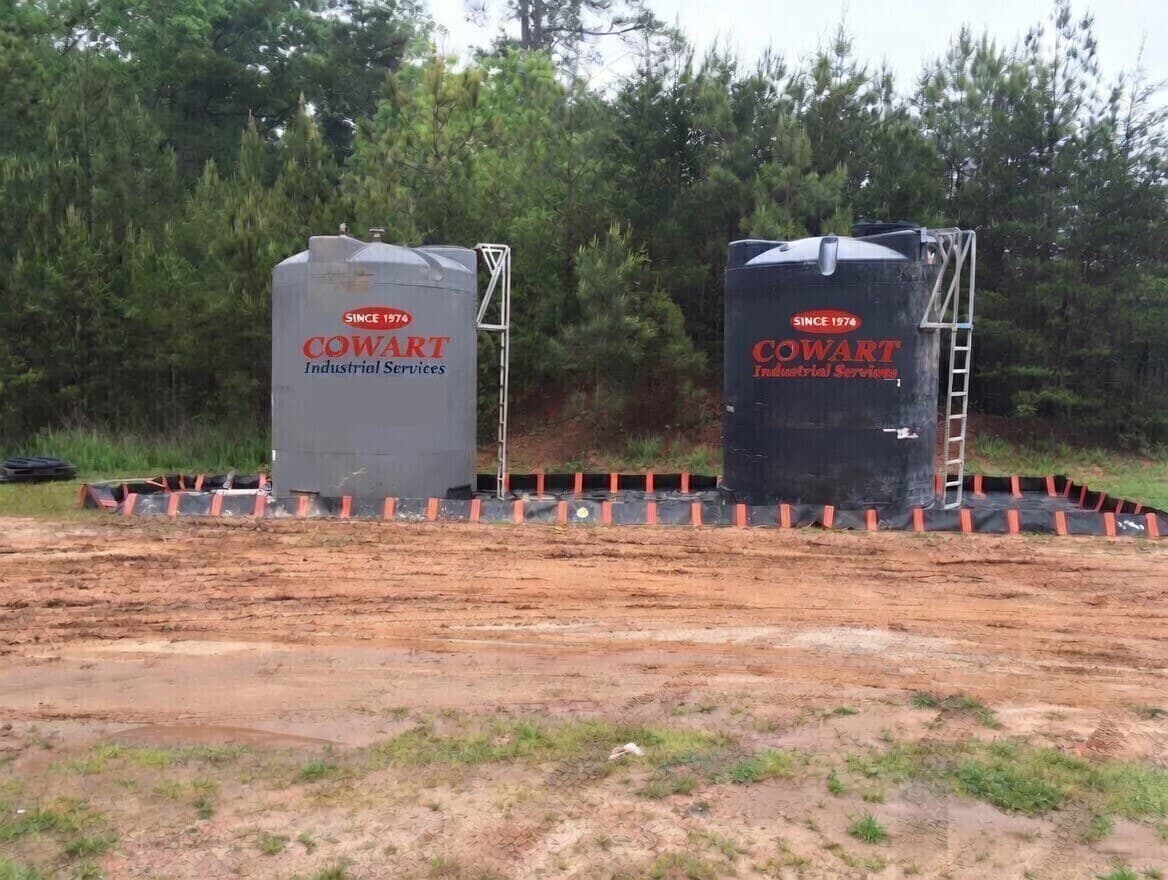
Cowart Industrial brings water filtration directly to your facility with our mobile on-site filtration service. By treating water at the generation point, we eliminate transport costs to off-site treatment, reduce facility downtime waiting for tanker turnaround, and provide compliance documentation tied to the actual treated water rather than reconstructed after the fact. The filtration unit travels with the work, skid- and trailer-mounted systems that connect to your dewatering, process water, or contaminated stormwater stream and produce treated water ready for discharge or reuse on-site.
Our on-site filtration train pairs the unit operations to the influent profile. Multi-media filtration handles suspended solids and turbidity; bag and cartridge filtration polish for fine particulate; granular activated carbon removes dissolved organics, hydrocarbons, and trace contaminants; specialty media handle iron, manganese, and heavy metals where present. The system can be configured for single-pass treatment, recirculation polishing, or batch processing depending on the project. Throughput sizing runs from low-flow polishing applications through high-throughput dewatering work.
Common applications include construction dewatering (treating groundwater pumped from excavations to a discharge-ready condition before release), industrial process-water polishing (final-stage filtration before discharge or reuse), contaminated stormwater treatment (treating water collected in secondary containment before release), project water reuse (filtering recovered project water so it can be reused in the next cycle), and emergency containment treatment. The work is documented end-to-end: influent and effluent samples, treatment logs, and the disposition documentation your environmental coordinator needs for the permit file. Discharge sampling and compliance reporting are part of the deliverable.
Why on-site treatment beats hauling
The default approach to industrial wastewater is to truck it off site to a treatment facility. That works fine when the volume is manageable and the treatment is straightforward, and it's how most of Cowart's wastewater management work runs. But when the volume is large, when the treatment is simple (suspended solids, hydrocarbons, biological), or when the water can be reused on-site instead of disposed, the haul-and-treat model gets expensive. A construction dewatering project producing 50,000 gallons a day can put 5-10 tankers on the road every shift; an on-site filtration trailer pulls the same flow through media and discharges treated water in real time.
The economics depend on the project. For small volumes or chemistry that needs the treatment plant, hauling is cheaper. For sustained projects with high-volume, low-complexity water, on-site filtration wins on every line item: less transport, less truck-time on the schedule, less waiting between loads, and treated water on-spec for permit discharge or reuse without the round-trip. We size the option to the project before committing to either approach.
What we treat and what we measure
Standard influent profiles run from suspended-solids-heavy dewatering water (groundwater from excavations, contaminated stormwater, sediment-laden process water) through hydrocarbon-impacted water (parts-washer rinse, equipment-wash water, oily process water) to specific-contaminant streams (iron- and manganese-laden well water, metals-contaminated stormwater). The filtration train is configured to the influent, multi-media for solids and turbidity, bag/cartridge for polishing, GAC for organics and hydrocarbons, specialty media for metals.
Sampling is part of the service. Influent samples document what we received; in-process sampling tracks the treatment performance; effluent samples document compliance with the discharge limit. Samples go to certified labs with chain-of-custody documentation. For projects under a permit (NPDES, construction stormwater, industrial pretreatment), we provide the sampling cadence and documentation the permit requires. For projects under regulatory scrutiny (remediation discharge, contaminated stormwater), we coordinate with the regulator and the customer's environmental consultant on the sampling plan.
Industries we serve
Where we work
- Atlanta
- Augusta
- Columbus
- Macon
- Savannah
- Carrollton
- LaGrange
- Newnan
- Rome
- Birmingham
- Mobile
- Montgomery
- Huntsville
- Tuscaloosa
- Anniston
- Knoxville
- Chattanooga
- Nashville
- Memphis
- Columbia
- Charleston
- Greenville
- Spartanburg
- Charlotte
- Raleigh
- Greensboro
- Wilmington
- Jacksonville
- Tampa
- Pensacola
- Panama City
- Jackson
- Meridian
- Pascagoula
- Gulfport
- Louisville
- Lexington
- Owensboro
- Paducah
Common questions
Quick answers on scope, method, safety, and turnaround. Don’t see your question? Ask us directly.
Q-01What is on-site water filtration?
On-site filtration is mobile water treatment delivered at the facility or project where the water is generated, instead of hauling the water to an off-site treatment plant. Trailer-mounted filtration units connect to your dewatering pump, process discharge, or contaminated stormwater stream and produce treated water ready for permit discharge or on-site reuse. The unit moves with the project.
Q-02What does on-site filtration cost compared to hauling?
It depends on the project. For low volumes, hauling to our treatment plant is typically cheaper. For sustained high-volume projects (construction dewatering, large-scale stormwater treatment, multi-week process water programs), on-site filtration is dramatically cheaper because the transport cost goes to zero. We size both options for the project before committing to either.
Q-03What contaminants can be removed by on-site filtration?
Suspended solids and turbidity (multi-media filtration), fine particulate (bag and cartridge filtration), dissolved organics and hydrocarbons (granular activated carbon), iron and manganese, and specific metals with the right media. The filtration train is configured to the influent profile, we don't deploy a one-size-fits-all unit.
Q-04Can you treat construction dewatering water?
Yes. Construction dewatering is a core application, groundwater pumped from excavations is treated on-site to a permit-discharge condition (usually suspended solids, turbidity, sometimes pH adjustment) before release. The filtration trailer sets up adjacent to the dewatering pump and treats the flow in real time, with sampling documenting the discharge condition.
Q-05Do you provide discharge sampling and documentation?
Yes. Influent and effluent samples are collected at the prescribed cadence, sent to certified labs with chain-of-custody documentation, and reported with the treatment record. For projects under a permit (NPDES, construction stormwater, industrial pretreatment), the sampling and reporting match the permit requirements.
Q-06How fast can you deploy a filtration unit?
Standard deployment is within the same week for scheduled projects. Emergency deployment (spill response, sudden discharge needs) is dispatched from Carrollton, GA on a 24-hour basis, with same-day setup possible across Georgia, Alabama, and the eastern half of our Southeast service area depending on equipment availability.
Q-07Can the treated water be reused on-site?
Yes, that's often the point. Project water reuse is common for hydroblasting feed (treat the recovered water, send it back to the hydro rig), dust-control applications, and any operation where filtered water replaces fresh-water supply. Reuse reduces both intake and discharge.
Q-08What states do you serve for on-site filtration?
Georgia, Alabama, Tennessee, South Carolina, North Carolina, Florida, Mississippi, and Kentucky. Mobile filtration trailers are dispatched from Carrollton, GA and can be staged at sites across the 8-state Southeast footprint for projects ranging from one-shift jobs through multi-month deployments.