Wastewater Management
Industrial wastewater treatment and disposal at our own plant: sludge solidification, vacuum transport, full paperwork. Serving the Southeast since 1974.
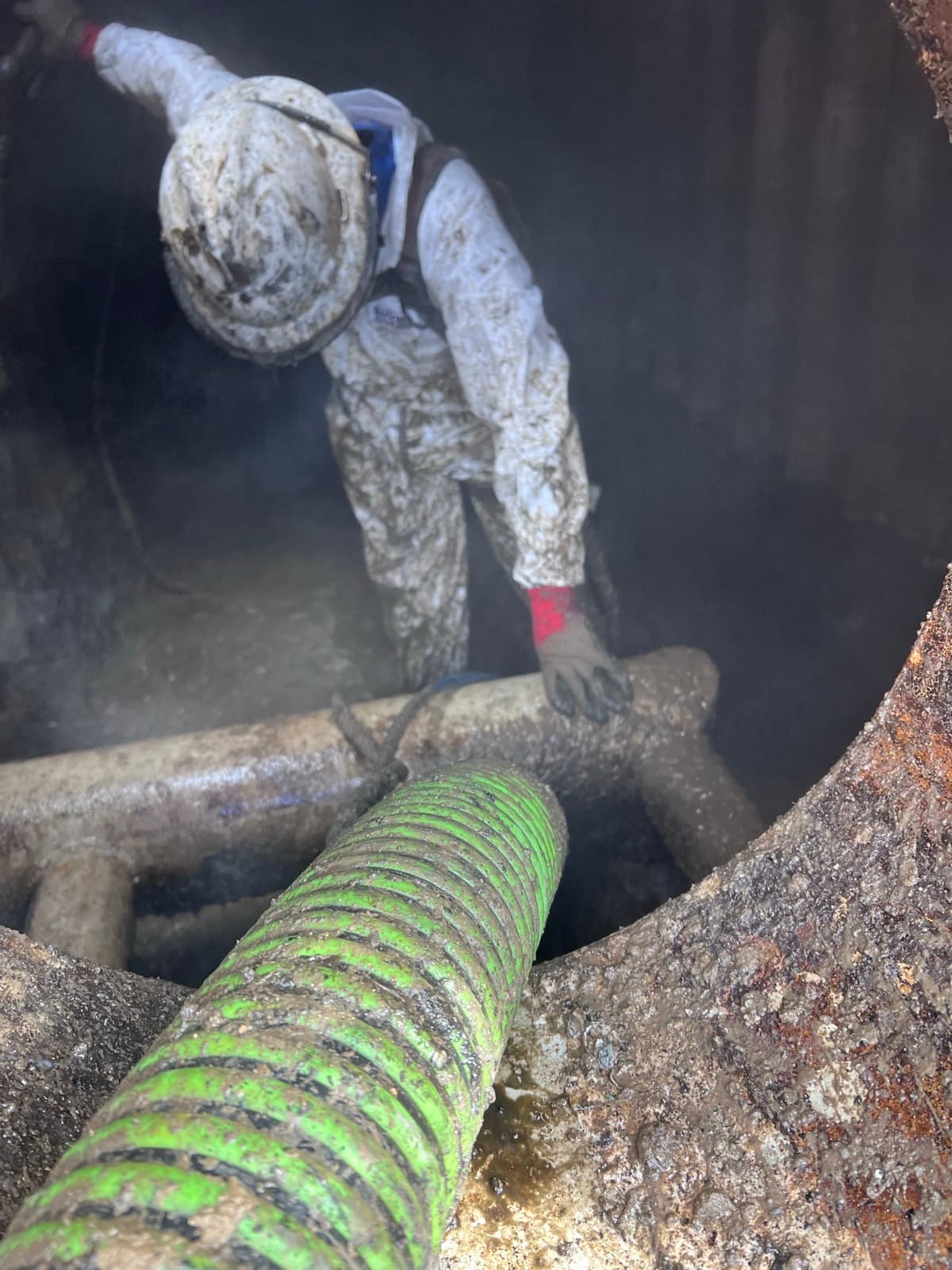
Cowart Industrial Services provides complete non-hazardous wastewater management for industrial facilities across the Southeast. The work includes on-site sludge solidification, vacuum truck collection, regulated transport under our own DOT number, and final treatment and disposal at our own plant in Carrollton, Georgia. The wastewater that comes out of your facility doesn't get handed off, it stays with us from the moment the vacuum hose drops in the tank to the moment the treated effluent is released under permit.
We treat the full range of non-hazardous liquid waste streams found in industrial operations: process water, oily water and emulsions, sump and pit liquids, parts-washer fluids, food-process wastewater, contaminated stormwater, leachate, latex and paint wash, and water-based cleaning residuals. The treatment train at our plant handles solids separation, oil-water separation, pH adjustment, coagulation/flocculation, and biological polishing as needed for the influent profile. Characterization is done on every load before processing.
Because we operate the entire chain ourselves, compliance documentation is consolidated. One vendor, one set of manifests, one phone number for your environmental coordinator. That matters when audit season starts and your generator records need to tie cleanly to disposition documents. Cowart has been doing this work since 1974, over 50 years of family-operated wastewater service in the Southeast, and the treatment plant in Carrollton is the anchor of the operation.
What we treat at the Carrollton plant
Cowart's wastewater treatment plant in Carrollton, Georgia is permitted for non-hazardous industrial wastewater. The streams that come in range from clean rinse water at the easy end to heavily emulsified parts-washer fluid and oily water at the difficult end. Common influents include manufacturing process water, sump and pit pumpouts, food-process wastewater (with FOG and high BOD), latex and paint-line wash, contaminated stormwater from secondary containment, leachate from holding ponds, and water-based cleaning residuals from industrial cleaning jobs we ran in the field.
What we don't take: RCRA hazardous waste, characteristic-hazardous streams (corrosive, ignitable, reactive, toxic above thresholds), and PCB-containing material. The plant is designed and permitted for non-hazardous treatment, and we honor those limits. Every load is profiled before it's accepted, and out-of-profile material is rejected at the gate, that's the cost of running a clean operation.
The treatment train pairs the right unit operations to the load: solids settling and clarification, dissolved air flotation for emulsified oils, chemistry-driven coagulation and flocculation for fine solids, pH adjustment, and polishing as the permit requires. Treated effluent is released under permit; recovered solids are dewatered and disposed appropriately.
Why single-vendor wastewater management matters
Industrial wastewater rarely moves in one step from generator to final disposal. There's a collection step, a transport step, a treatment step, and a disposal step, and at most companies, those four steps involve three or four different vendors. Each of those vendors has its own insurance certificate, its own DOT registration, its own audit history, and its own line on your manifest log. The math gets ugly when something goes wrong: which company had custody when the spill happened, which manifest is authoritative, which insurance carrier covers the loss.
Cowart runs all four steps. The vacuum truck that collects your wastewater carries our DOT number. The transport runs on our highway authority. The treatment happens at our plant. The disposal documentation is generated by our system. For your compliance department, that's a single Certificate of Insurance, a single contractor on the auditable-vendor list, and a single phone number to call.
Service models, scheduled, on-demand, and emergency
Most of our wastewater work runs on standing pickup schedules: weekly, biweekly, or monthly tankage cycles for plants that generate predictable volumes. The driver and the dispatch contact don't change, which means access procedures, gate codes, weight tickets, and signoff routines stay consistent. On-demand pickups handle one-off needs, a tank that has to be emptied for inspection, a sump that filled faster than expected, a project that generated more wash water than the holding pond can hold.
Emergency service is the third leg. Spill response, containment overflow, equipment failure that leaves you holding wastewater you can't process, 24-hour dispatch from Carrollton, with vacuum trucks staged for response and the treatment plant ready to receive whatever comes back. Most emergencies are non-hazardous; we handle them in-house. The few that escalate to hazardous classification get referred under a documented handoff to a permitted hazmat responder.
Industries we serve
Where we work
- Atlanta
- Augusta
- Columbus
- Macon
- Savannah
- Carrollton
- LaGrange
- Newnan
- Rome
- Birmingham
- Mobile
- Montgomery
- Huntsville
- Tuscaloosa
- Anniston
- Knoxville
- Chattanooga
- Nashville
- Memphis
- Columbia
- Charleston
- Greenville
- Spartanburg
- Charlotte
- Raleigh
- Greensboro
- Wilmington
- Jacksonville
- Tampa
- Pensacola
- Panama City
- Jackson
- Meridian
- Pascagoula
- Gulfport
- Louisville
- Lexington
- Owensboro
- Paducah
Common questions
Quick answers on scope, method, safety, and turnaround. Don’t see your question? Ask us directly.
Q-01What is industrial wastewater management?
Industrial wastewater management is the regulated collection, transport, treatment, and disposal of liquid waste generated by industrial operations, process water, oily water, sumps, pits, parts-washer fluids, food-process wastewater, and similar non-hazardous streams. It requires a generator-to-disposal paper trail (manifests, weight tickets, treatment records, disposition documentation) so the waste can be tracked from the facility where it was created to the point where it was treated and released under permit.
Q-02Do you treat hazardous wastewater?
No. Cowart's treatment plant is permitted for non-hazardous industrial wastewater. Streams that classify as RCRA hazardous (corrosive, ignitable, reactive, toxic above thresholds) or contain regulated quantities of PCBs aren't accepted at our plant. We profile every load before pickup, and out-of-profile material is rejected at the gate. If your facility generates hazardous wastewater, we can refer you to a permitted hazmat responder under a documented handoff.
Q-03What wastewater streams do you accept?
Non-hazardous process water, oily water and emulsions, sump and pit pumpouts, parts-washer fluids, food-process wastewater (including FOG/high-BOD streams), latex and paint-line wash, contaminated stormwater from secondary containment, leachate, and water-based cleaning residuals. If you're not sure whether your stream qualifies, send us a profile, we'll characterize it and tell you whether we can accept it before scheduling a pickup.
Q-04Do you operate your own treatment plant?
Yes. Cowart's non-hazardous wastewater treatment plant is in Carrollton, Georgia, west of Atlanta. The plant is the anchor of our single-DOT, single-vendor service model. Treated effluent is released under permit; recovered solids are dewatered and disposed appropriately.
Q-05How is single-vendor wastewater service different?
Most industrial wastewater jobs involve three or four vendors, one for collection, one for transport, one for treatment, one for disposal documentation. Cowart runs all four. One DOT number on every truck, one Certificate of Insurance for your audit file, one contractor on the regulated-vendor list, one phone number when something needs attention. Your compliance department gets a simpler audit trail; your finance department gets predictable disposal costs.
Q-06Can you do on-site sludge solidification?
Yes. On-site sludge solidification is a routine part of our wastewater work. We bring the equipment and reagents to the facility, solidify the sludge to pass paint-filter testing for landfill acceptance, and transport the resulting solid material to a permitted disposal facility under our own DOT number. This is often the right approach when liquid handling and trucking is more expensive than solidification and bulk transport.
Q-07Do you offer scheduled wastewater pickup?
Yes. Most of our wastewater customers run on weekly, biweekly, or monthly standing pickup schedules. Drivers and dispatch contacts stay consistent, so gate codes, weight ticket procedures, and signoff routines don't have to be re-explained each visit. We also handle on-demand pickups and 24-hour emergency response, spill events, containment overflow, equipment failure that leaves a facility holding wastewater it can't process.
Q-08What states do you serve for wastewater management?
Cowart Industrial provides wastewater management services across the Southeast, Georgia, Alabama, Tennessee, South Carolina, North Carolina, Florida, Mississippi, and Kentucky. The treatment plant is in Carrollton, GA, and 24-hour dispatch covers the full eight-state footprint for both scheduled and emergency wastewater work.