Oil-Water Separator Service
Oil-water separator cleaning and pump-out across the Southeast, quarterly oil removal, annual full pump-out, in-house disposal in Carrollton, GA.
Oil-water separators (OWS, also called oil/water interceptors) collect the oily wastewater generated by maintenance bays, wash bays, fuel islands, and similar operations and physically separate the oil layer from the water before discharge to sewer. Gravity does the work, denser water settles, lighter oil floats, assisted by baffles, coalescing media, and sediment chambers depending on the design. The water side typically discharges under a local sewer authority permit. The oil side accumulates between service visits and has to be pumped out by a licensed contractor before the separator's capacity fills and starts allowing oil to bypass into the sewer.
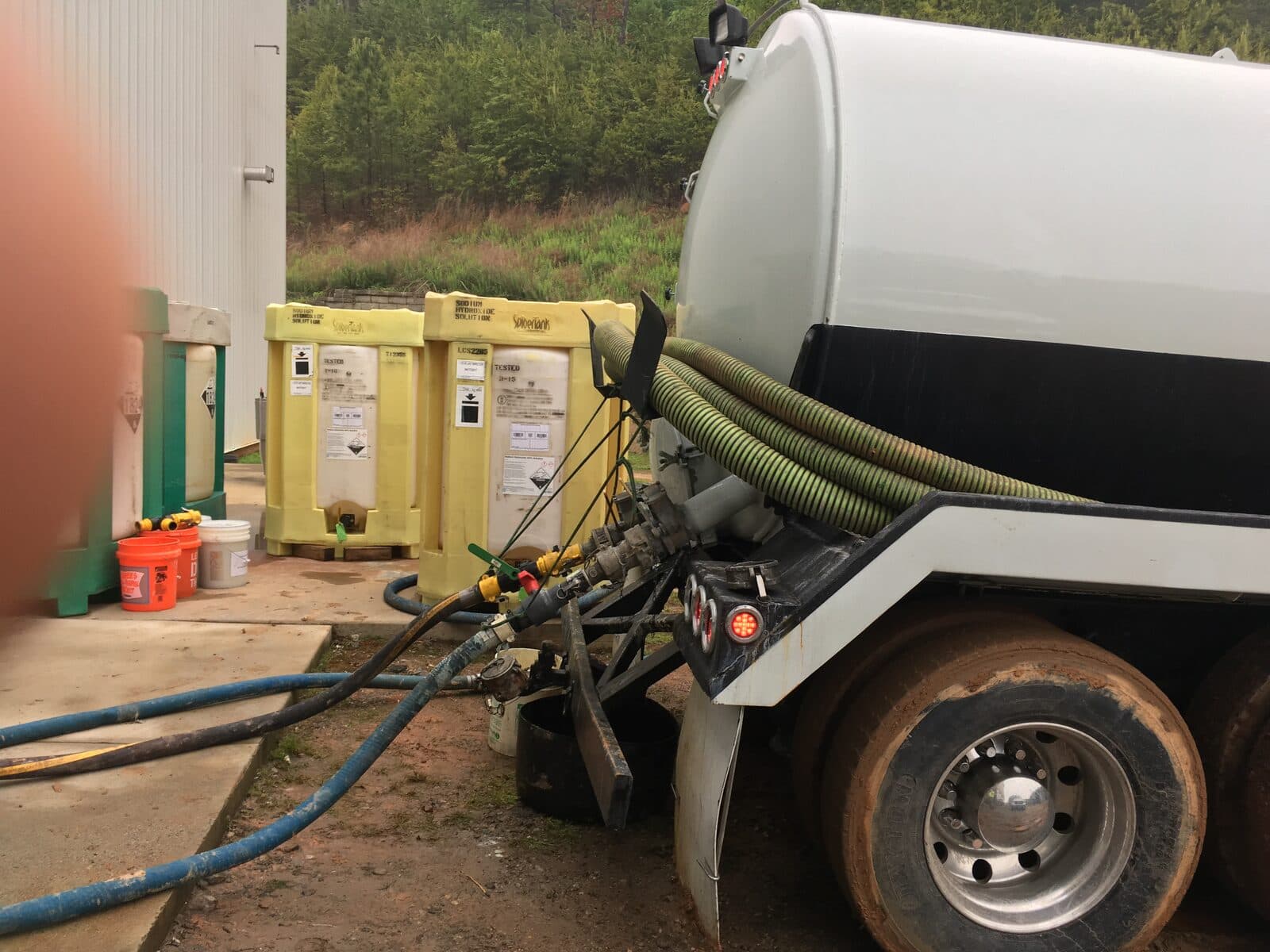
Cowart Industrial provides oil-water separator service across an 8-state Southeastern footprint, scheduled quarterly oil-skim pumpouts, annual full pump-outs with cleaning and inspection, coalescing media replacement, and emergency response when a separator overflows or fails inspection. The work uses our liquid vacuum trucks (3,000-5,000 gallon Kenworth tankers), runs under Cowart's own DOT number, and ends at our non-hazardous wastewater treatment plant in Carrollton, Georgia. One vendor, one Certificate of Insurance, one paper trail.
OWS service customers run the range from single-bay auto repair shops up through multi-location dealership groups, fleet maintenance yards, transportation fueling facilities, and industrial maintenance operations. The cadence depends on volume of oily water generated and the discharge permit conditions set by the local sewer authority, typically quarterly oil-only pumpouts plus an annual full-cleaning service, but more frequent for high-volume operations. We'll tell you straight what your specific operation actually needs based on the inspection at the first visit.
What an oil-water separator does and who needs one
An oil-water separator is essentially a multi-chamber tank engineered around the density difference between water and petroleum products. Wastewater enters the inlet chamber, where heavier solids (grit, sediment, sludge) drop out. The flow then passes into a separation chamber sized to slow the water enough that suspended oil droplets can rise and coalesce, often helped along by coalescing media (corrugated plates or media packs that give the oil droplets surfaces to stick to and merge). Oil accumulates in an oil reservoir at the top; clean(er) water discharges from an outlet chamber to the sewer.
Facilities required to have one typically include auto dealerships with service departments, auto and heavy truck repair shops, commercial car washes (especially those that clean undercarriages), transportation fueling facilities and truck stops, fleet maintenance yards, vehicle auction yards, salvage and tow yards, scrap metal processors, and industrial maintenance operations where machinery is washed or oily process water is generated. Most are required by the local sewer authority's industrial discharge permit. The permit conditions usually dictate how often the separator must be serviced and inspected, with documentation kept on file for the permit reviewer.
Quarterly oil removal vs. annual full pump-out, what each visit actually covers
The industry-standard service cadence is quarterly oil-only pumpouts plus one full cleaning per year. The quarterly visits skim the accumulated free oil off the top of the separator (and any easily-accessible sludge in the sediment chamber), keeping the unit's capacity from filling and reducing the risk of oil bypass into the sewer between annual cleanings. The annual visit empties the entire unit, washes the chambers, inspects baffles and coalescing media for damage or fouling, replaces media if needed, and verifies the unit is functioning as designed before refilling with clean water.
Facilities with higher oil-generation rates (busy car washes, heavy-truck repair shops, high-volume fueling) often need more frequent service than the quarterly/annual baseline. Conversely, low-volume operations may only need the annual visit. The first inspection visit tells us which category your operation falls into, we'll measure free-oil thickness and sediment accumulation and recommend a cadence calibrated to your actual usage rather than a generic schedule.
Every service visit produces a documentation packet: vacuum truck weight ticket, inspection notes (oil and sediment levels, media condition, any visible damage), and a certificate of disposition for the recovered material. For accounts under a sewer discharge permit, that documentation goes straight into the file the permit reviewer asks for during inspections.
Why a single-DOT, in-house treatment contractor matters for OWS work
Most oil-water separator service companies are middlemen on the disposal side. They pump out the separator, load the recovered oil/water/sludge into a tanker, and haul it to a third-party disposal facility, often through another subcontractor. The customer ends up with a manifest crossing two or three vendors and a disposal cost the OWS contractor doesn't control.
Cowart owns the whole chain. The vacuum truck that empties your separator is a Cowart truck. The driver is a Cowart employee. The DOT authority on the trailer is Cowart's. The destination is our non-hazardous wastewater treatment plant in Carrollton, GA, where the recovered material is characterized, treated, and disposed under our own permits and manifests. For your sewer-permit file, that means a single contractor name on every disposition record, and predictable pricing because we're not passing through markup from third-party haulers or disposal facilities.
We've been doing this work since 1974. Same family ownership, same treatment plant location, same operating model. For OWS customers under sewer discharge permits, where the inspector wants to see consistent contractor records year over year, that continuity is part of the value.
Industries we serve
Where we work
- Atlanta
- Augusta
- Columbus
- Macon
- Savannah
- Carrollton
- LaGrange
- Newnan
- Rome
- Birmingham
- Mobile
- Montgomery
- Huntsville
- Tuscaloosa
- Anniston
- Knoxville
- Chattanooga
- Nashville
- Memphis
- Columbia
- Charleston
- Greenville
- Spartanburg
- Charlotte
- Raleigh
- Greensboro
- Wilmington
- Jacksonville
- Tampa
- Pensacola
- Panama City
- Jackson
- Meridian
- Pascagoula
- Gulfport
- Louisville
- Lexington
- Owensboro
- Paducah
Common questions
Quick answers on scope, method, safety, and turnaround. Don’t see your question? Ask us directly.
Q-01What is an oil-water separator?
An oil-water separator (OWS, sometimes called an oil/water interceptor) is a multi-chamber tank that separates oil from water in wastewater before discharge to sewer. Used at auto repair shops, dealerships, car washes, fueling facilities, fleet maintenance yards, and industrial maintenance operations, anywhere oily wastewater is generated and the local sewer authority requires pretreatment before discharge.
Q-02How often does an oil-water separator need to be serviced?
Industry standard is quarterly oil-skim pumpouts plus one full pump-out and cleaning per year. Higher-volume operations (busy car washes, heavy-truck shops, high-traffic fueling) often need more frequent service; low-volume operations sometimes only need the annual visit. Your local sewer discharge permit may specify a required minimum cadence, we'll match the schedule to your permit and your actual oil-accumulation rate.
Q-03What's the difference between a quarterly oil-skim and an annual full pump-out?
Quarterly visits pump just the accumulated free oil off the top of the separator (and accessible sediment from the sludge chamber), keeping the unit's separation capacity from filling up between annual cleanings. The annual visit empties the whole unit, washes the chambers, inspects and replaces coalescing media as needed, checks baffles for damage, and verifies the separator is functioning before refilling with clean water. Both come with documentation for your permit file.
Q-04Do you replace coalescing media?
Yes, coalescing media replacement is part of our annual full-service visit when the inspection shows the media has fouled, collapsed, or worn out. For separators with corrugated-plate media, we clean and reinstall when possible; for media-pack designs, we replace with manufacturer-spec material. We document media condition at every visit so you can track when replacement is coming due.
Q-05What kinds of facilities need oil-water separator service?
Auto dealerships with service departments, auto and heavy-truck repair shops, commercial car washes (especially with undercarriage cleaning), transportation fueling facilities and truck stops, fleet maintenance yards, vehicle auction and storage yards, salvage/tow yards, scrap metal processors, industrial maintenance shops, and any operation generating oily wastewater that discharges to a sewer system under a pretreatment permit.
Q-06Where does the recovered oil and water go?
Recovered material travels under Cowart's own DOT number from your facility directly to our non-hazardous wastewater treatment plant in Carrollton, Georgia. We don't subcontract transport or disposal, the same company that pumped your separator characterizes, treats, and disposes the recovered material. Your sewer-permit file gets a single contractor name on every disposition record.
Q-07Can you respond to emergency oil-water separator issues?
Yes. 24-hour dispatch from Carrollton, GA. Common emergencies, separator overflow, failed inspection requiring immediate pump-out, mechanical failure of a fixed pump, or oil-discharge incidents, get same-day response across Georgia, Alabama, and the eastern half of our 8-state service area. Call dispatch and we'll route the right truck before working out the paperwork.
Q-08What states do you serve for oil-water separator service?
Georgia, Alabama, Tennessee, South Carolina, North Carolina, Florida, Mississippi, and Kentucky. Carrollton, GA is the dispatch hub and treatment plant location. For accounts in the immediate Atlanta metro and West Georgia footprint, response is typically same-day or next-day; longer distances follow appropriately scaled response windows.