Line Jetting and Pipe Cleaning
Industrial line jetting and pipe cleaning across the Southeast, high-pressure water clears scale, grease, and process buildup. CCTV included.
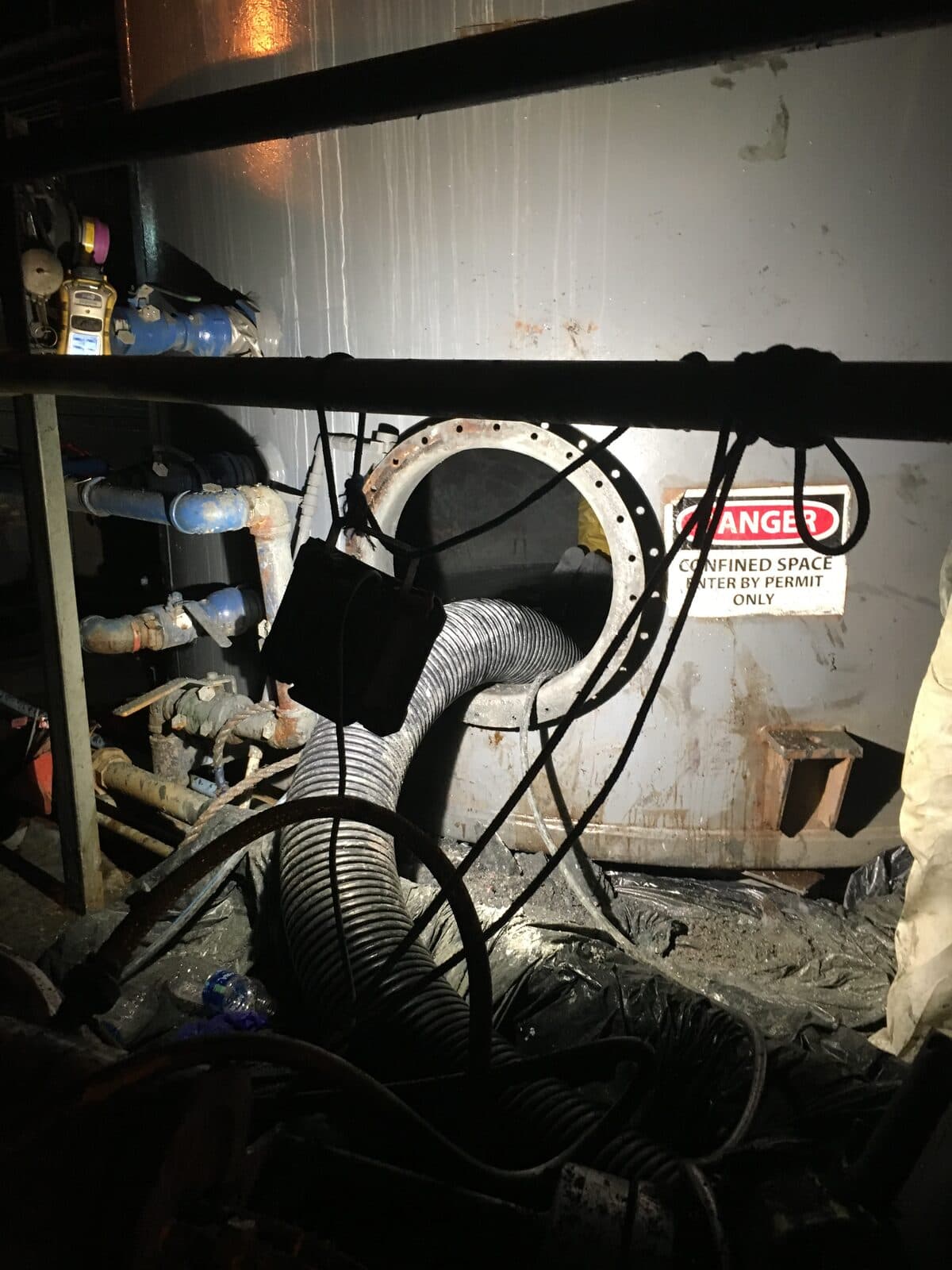
Cowart Industrial provides line jetting and pipe cleaning service for industrial facilities. The work uses high-pressure water, typically 4,000 to 10,000+ PSI depending on the line, and rotating or directional jetting nozzles to clear blockages, scale, grease, biological growth, and process buildup from inside piping, drain lines, sewer mains, and process equipment. Nozzles are matched to the line size, material, and obstruction profile; pressure is selected to clear the deposit without damaging the pipe interior or seals. The result is full flow restored without disassembly, downtime, or chemistry, just water through the line and recovery on the other end.
Common applications include process drain-line cleaning, sewer main jetting, sludge-line clearing, food-process waste-line decontamination, cooling-tower drain restoration, oil-water separator drain cleaning, slot-drain and trench-drain restoration, and emergency response for blocked or backed-up systems. We handle lines from small process drains (2-inch and up) through large industrial sewer mains (24-inch and beyond), with pre- and post-CCTV inspection available to document condition, identify root causes (root intrusion, pipe failure, scale buildup), and verify the clean.
Line jetting pairs naturally with Cowart's vacuum truck service, material dislodged from the line is recovered by the vacuum unit at the downstream cleanout, captured rather than discharged to the next section of pipe or to the facility drain system. The complete loop, jet, vacuum, transport, dispose at our treatment plant, runs under one dispatch and one DOT number. That's important because line jetting without recovery just moves the problem downstream; recovery is what makes it a real cleaning, not a flush.
Industrial line jetting vs. residential drain cleaning
Residential drain cleaning uses small hydro jetters at 1,500-4,000 PSI, designed for 1.5- to 4-inch domestic plumbing. It clears soap scum, hair, paper, and the kind of light grease that builds up in kitchen and bathroom lines. The equipment is sized for service vans and the work is straightforward.
Industrial line jetting is a different category. The pressure is higher (4K to 10K+ PSI for tough deposits), the equipment is truck-mounted, the lines are larger (often 6 to 24-inch industrial sewer or process drain), and the deposits are harder: process scale, hardened grease from food production, sludge accumulation, mineral deposits from cooling water, biological growth from anaerobic conditions, and root intrusion through deteriorated pipe joints. The nozzles, hose, and pump are scaled to the work, and the operator skillset is different, industrial work requires confined-space credentials, line-isolation procedures, and the ability to coordinate with facility operations to take the line out of service for the cleaning.
CCTV inspection, before and after
Pre-cleaning CCTV inspection tells you what's actually in the line before the jetting starts. That matters because the obstruction isn't always what the symptom suggests: a backed-up drain might be a buildup, a partial collapse, a root intrusion, or a foreign object. The right cleaning method depends on which one. We deploy CCTV cameras through the line, record the inspection video, and produce a written report identifying the obstructions, the pipe condition, and the recommended cleaning approach.
Post-cleaning CCTV verifies the clean. The video shows the line restored to full bore, documents any underlying pipe damage exposed by the cleaning (cracks, broken joints, deformations) for follow-up, and provides documentation for your facility records. For lines under regulatory inspection, food-process drains, industrial sewer mains tied to a discharge permit, the pre/post CCTV record is often part of the compliance paper trail.
Industries we serve
Where we work
- Atlanta
- Augusta
- Columbus
- Macon
- Savannah
- Carrollton
- LaGrange
- Newnan
- Rome
- Birmingham
- Mobile
- Montgomery
- Huntsville
- Tuscaloosa
- Anniston
- Knoxville
- Chattanooga
- Nashville
- Memphis
- Columbia
- Charleston
- Greenville
- Spartanburg
- Charlotte
- Raleigh
- Greensboro
- Wilmington
- Jacksonville
- Tampa
- Pensacola
- Panama City
- Jackson
- Meridian
- Pascagoula
- Gulfport
- Louisville
- Lexington
- Owensboro
- Paducah
Common questions
Quick answers on scope, method, safety, and turnaround. Don’t see your question? Ask us directly.
Q-01What is industrial line jetting?
Industrial line jetting uses high-pressure water (4,000 to 10,000+ PSI) and specialized jetting nozzles to clear scale, grease, sludge, roots, and process buildup from inside industrial drain lines, sewer mains, and process piping. The water does the cutting, no chemicals, no disassembly. Dislodged material is recovered by a paired vacuum truck so the obstruction is removed from the system, not just pushed downstream.
Q-02What's the difference between hydro jetting and line jetting?
The terms are used interchangeably. "Hydro jetting" is more common in plumbing and commercial drain contexts; "line jetting" is the more typical industrial term, especially for process piping and industrial sewer mains. Both refer to the same fundamental technique: high-pressure water through a directional nozzle clears the pipe interior.
Q-03What can you clean with line jetting?
Process drain lines, industrial sewer mains, sludge lines, food-process waste lines, cooling-tower drain restoration, oil-water separator drains, slot drains and trench drains, condensate drains, and most non-pressurized piping systems. Lines from 2-inch through 24-inch and larger are within standard scope.
Q-04Do you do CCTV pipe inspection?
Yes. Pre-cleaning CCTV identifies what's in the line before work starts (buildup, roots, collapse, foreign object) so the right cleaning method is selected. Post-cleaning CCTV documents the clean and exposes any underlying pipe damage that needs follow-up. Video and written inspection reports are provided as part of the deliverable.
Q-05Can you handle grease lines from food processing?
Yes. Food-process waste lines are a routine application, hardened grease buildup, FOG accumulation, organic deposits, and the kind of biological growth that comes with high-BOD waste streams. The cleaning is paired with vacuum recovery so the dislodged grease and waste don't end up downstream in your interceptor or the municipal sewer connection.
Q-06What about emergency response for backed-up lines?
24-hour dispatch from Carrollton, GA. Backed-up process drains, sewer overflows, and line failures get same-day response across Georgia, Alabama, and the eastern half of our 8-state Southeast service area. Bring the line back to flow first, document the cause, schedule the follow-up.
Q-07What happens to the material that gets jetted out of the line?
Material dislodged by the jet is recovered by a paired vacuum truck at the downstream cleanout, transported under Cowart's DOT number, and disposed at our treatment plant or a permitted facility. Without paired recovery, line jetting just moves the obstruction downstream, recovery is what makes the job a real cleaning rather than a flush.
Q-08What states do you serve for line jetting?
Georgia, Alabama, Tennessee, South Carolina, North Carolina, Florida, Mississippi, and Kentucky. Line jetting trucks and crews are dispatched from Carrollton, GA with paired vacuum recovery and CCTV inspection capability.